

In the 1920s, alongside economic and social changes, the Art started flourishing in Italy.
*fahrsprojects.blog reminds the reader that no material on this website is intended to reflect creator’s personal beliefs, opinions, or views.
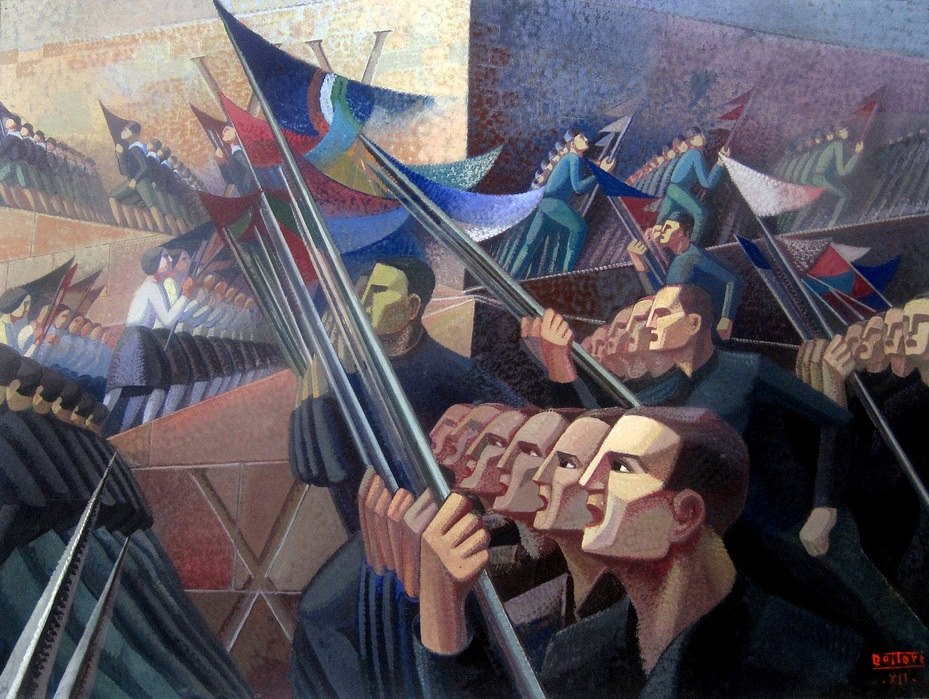
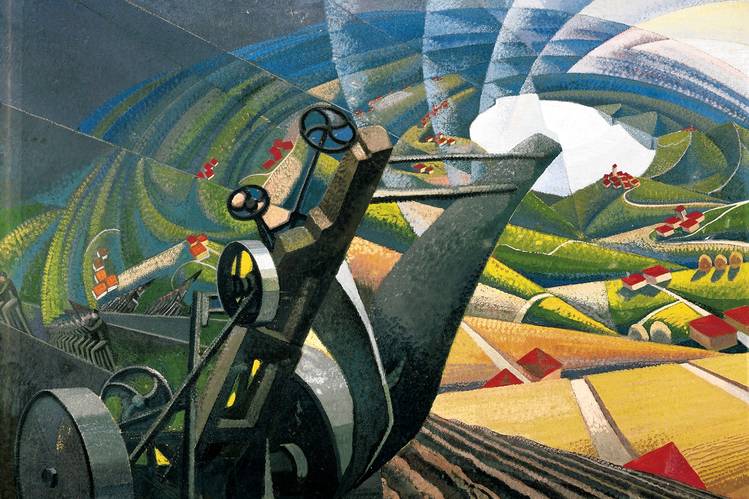
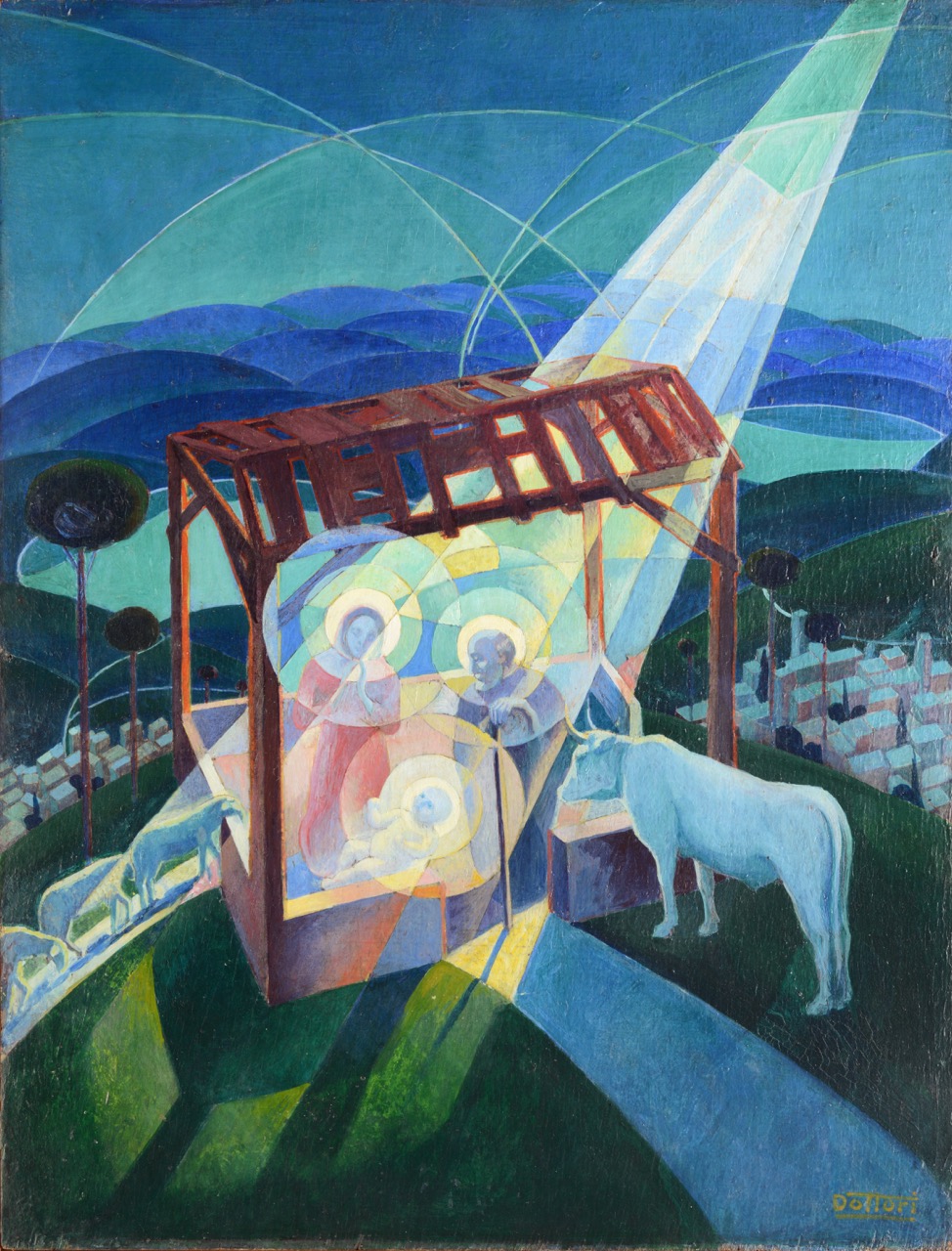
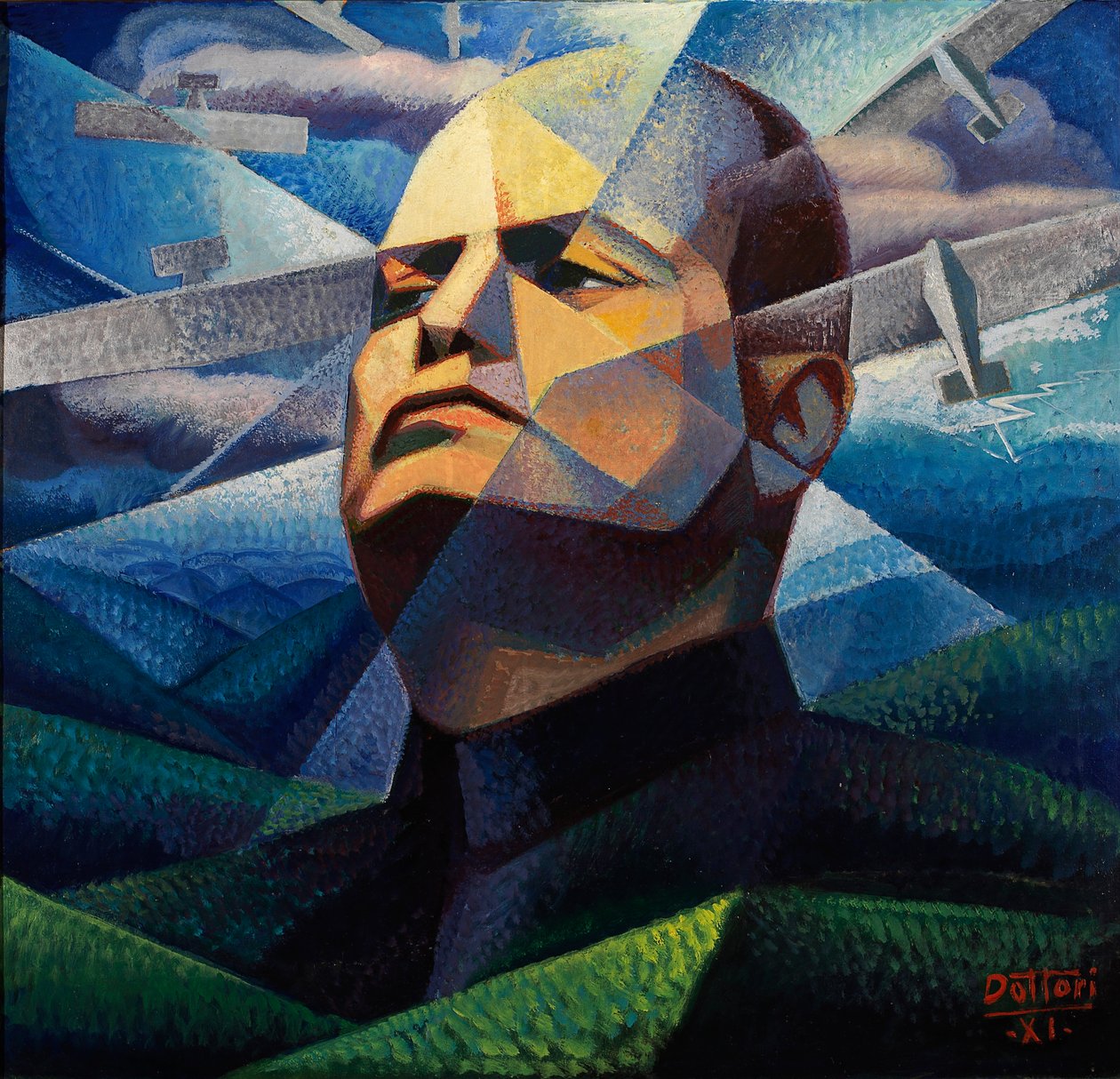
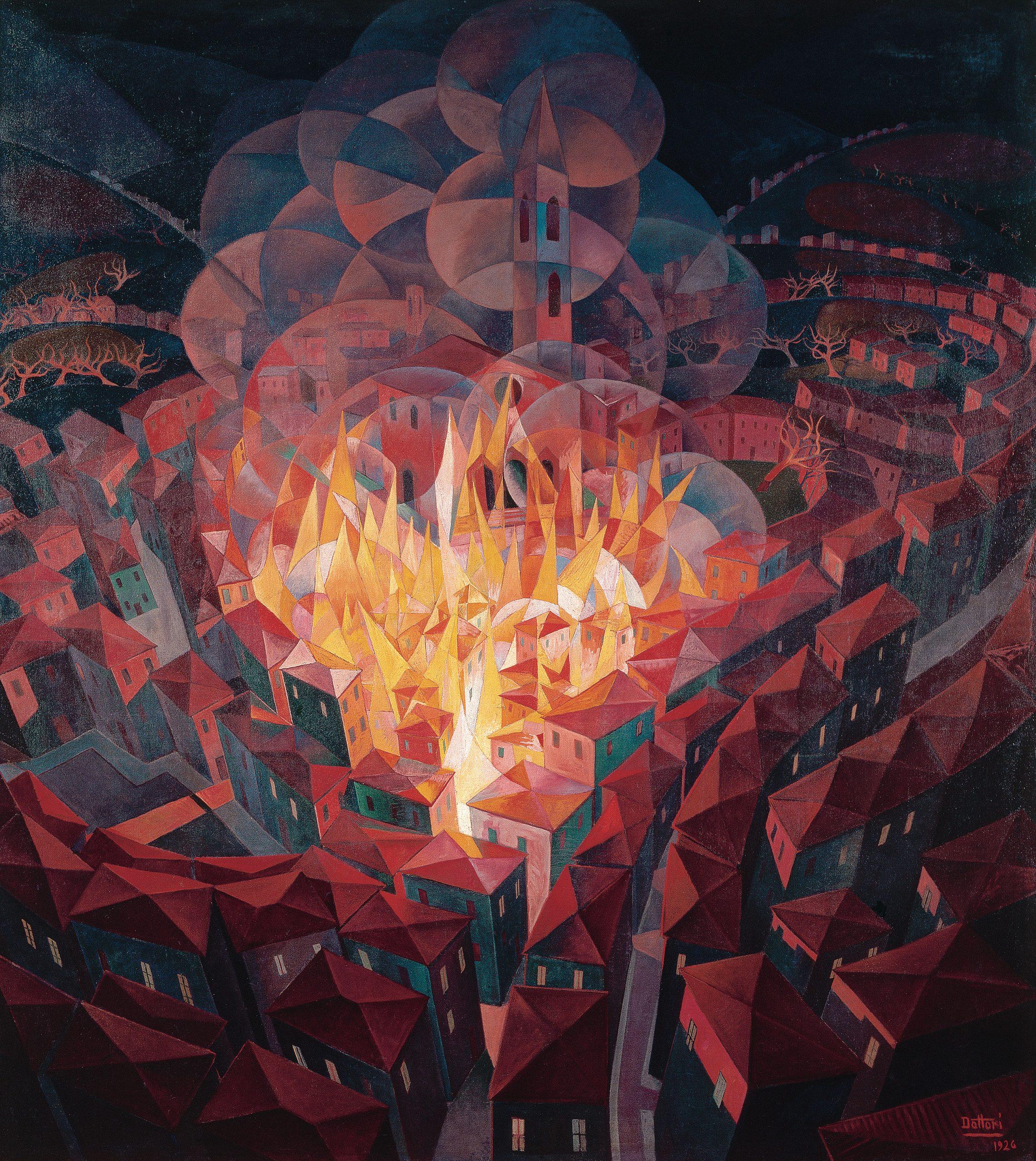
The main symbol of Italian culture during the Duce’s era (also known as the Interbellum Period) was the Futurist painting, founded by Filippo Tommaso Marinetti. The style was not limited to him, as multiple other Italian futurists, such as Gerardo Dottori, entered the artistic stage and presented their epic works.
It was a time of change not only in Italy, but in the whole world, when dramatically-new perspectives witnessed their own rise in the post-WW1 societies. Fascist Italy was in the vanguard of one of them – fascism, the concept based on the belief that national identity and unity are the supreme values a citizen can hold. Divided into entities – nations – the world is seen as a jungle where they fight each other like predatory animals, in order to achieve economic, cultural, and even genetic dominance. The radicalism of such belief, which challenges the whole Interbellum order, is emphasized by the rigid “force” lines that penetrate the canvas. The paintings illustrate action, frozen in a single instant – a revolutionary approach, designed to provoke the fanatical emotions in the viewer.
The following is compilation of the Gerardo Dottori’s paintings –
!["Trasvolatore" ["Transporter"] by Gerardo Dottori](https://fahrsprojects.blog/wp-content/uploads/2025/12/transporter_by_dottoti.jpg)
!["Inferno di Battaglia Sul Paradiso del Golfo" [The Battle Hell over the Paradise of the Gulf] by Gerardo Dottori](https://fahrsprojects.blog/wp-content/uploads/2025/12/inferno_di_battaglia_sul-_paradiso_del_golfo_by_dottori.jpg)
As one can see, those Dottori’s creations glorify chaos, technology, and war (aside from Christmas – this one reflects his religious interest), as well as fanatic loyalty to the ideology: the looks in Duce and Polyptych of the Fascist Revolution are absolute in their determination; not a single moment of doubt is noticeable on the depicted faces.
The other famous artistic representative of that era is Tullio Crali. Crali was born in what is now Montenegro. In the early 1920s, he became fascinated with Futurism, working as a self-learning artist. Combining Futurism with his love toward aviation, he became one of the key artists in the unique movement of “aeropainting [aeropittura]” of the late 1920s and 1930s.
Tullio Crali’s most famous paintings are shown here –
!["At Low Altitude Over City [A bassa quota sulla citta]" by Tullio Crali](https://fahrsprojects.blog/wp-content/uploads/2025/12/a-bassa-quota-sulla-citta.jpg)
!["Aerofighter I [Aerocaccia i]" or "Hunting Duel [Duello di caccia]" by Tullio Crali](https://fahrsprojects.blog/wp-content/uploads/2025/12/crali-aerocaccia-i-duello-di-caccia-1936-2.jpg)
!["Diving on a City [Incuneandosi nello abitato]" by Tullio Crali](https://fahrsprojects.blog/wp-content/uploads/2025/12/diving_on_a_city_incuneandosi_nello_abitato_by_tullio_crali_art_print.jpg)
(Incuneandosi nello abitato) by Tullio Crali
!["Battle for the Airport [Battaglia ull'aeroporto]" by Tullio Crali](https://fahrsprojects.blog/wp-content/uploads/2025/12/tullio_crali_battaglia_sullaeroporto_mitragliere_in_azione.jpg)
!["Aerofighter II [Aerocaccia II]" by Tullio Crali](https://fahrsprojects.blog/wp-content/uploads/2025/12/aerocaccia_ii_by_tullio_crali.jpg)
![Tullio Crali "Before the Parachute Opens [Prima che si Apra il Paracadute]"](https://fahrsprojects.blog/wp-content/uploads/2025/12/tullio_crali_before_the_parachute_opens_prima-che-si-apra-il-paracadute.jpg)
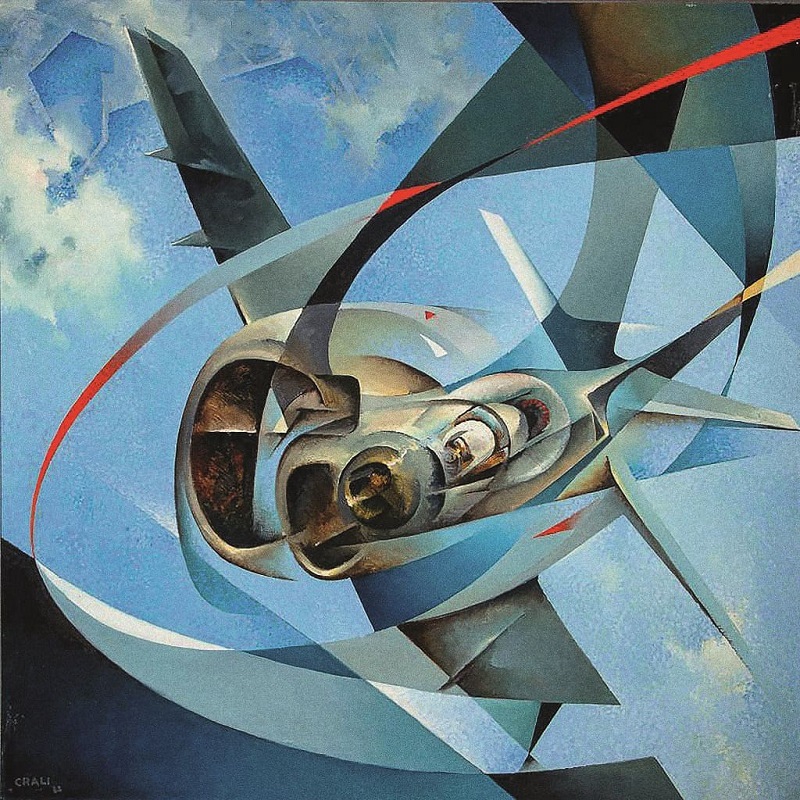
It is very easy to guess that Crali himself was a pilot, and that is true. He was born in 1910, and his first flight was in 1928.
Bibliography
Crali, Tullio. A bassa quota sulla città [Low Altitude Over the City]. 1939. Oil on panel. Private Collection.
Crali, Tullio. Aerocaccia II [Aerofighter II]. c. 1936. Oil on panel. Private Collection.
Dottori, Gerardo. Agricoltura [Agriculture]. 1934. Oil on canvas. Galleria Nazionale d’Arte Moderna e Contemporanea, Rome.
Crali, Tullio. Battaglia ull’aeroporto [Battle for the Airport]. 1936. Oil on canvas. Private Collection.
Dottori, Gerardo. Il Duce. 1933. Oil on canvas. Private Collection.
Crali, Tullio. Duello di caccia [Hunting Duel]. Oil on canvas. Museo di Arte Moderna e Contemporanea di Trento e Rovereto (MART), Rovereto, Italy.
Dottori, Gerardo. Incendio in città [Fire in the City]. 1926. Oil on canvas. Private Collection.
Crali, Tullio. Incuneandosi nello abitato [Diving on a City]. 1939. Oil on canvas. Private Collection.
Dottori, Gerardo. Inferno di Battaglia Sul Paradiso del Golfo [The Battle Hell over the Paradise of the Gulf]. c. 1935. Oil on canvas. Private Collection.
Crali, Tullio. Monoplano Jonathan. 1929. Oil on canvas. Private Collection.
Dottori, Gerardo. Natività [Nativity]. c. 1940. Oil on canvas. Private Collection.
Dottori, Gerardo. Polittico della rivoluzione fascista [Polyptych of the Fascist Revolution]. 1934. Oil on canvas. Private Collection.
Crali, Tullio. Prima che si apra il paracadute [Before the Parachute Opens]. c. 1939. Oil on canvas. Private Collection.
Dottori, Gerardo. Trasvolatore [Transporter]. c. 1930. Oil on canvas. Private Collection.
 fahrsprojects.blog