

Songs, poems, paintings, and Art in general were used by the Revolution for propaganda. Each Revolutionary episode could be romantically glorified through Art. The Revolution was giving birth to the idealistic characters who hold different values, depending on the nation where it’s happening, but who are united by one idea – the absolute readiness of an immediate self-sacrifice in the name of the Revolution. This determination was supported by the undeniable belief that the hero’s name will be forever inscribed in the annals of history, and that their lives will serve as a foundation on which the utopian future will stand.
Ideocratic regimes were always distinguished by the abundance of talented artists and creators who loyally served the ideology. Besides the official paintings that would go to museums and government residences, the artists were creating conspicuous posters, easy-to-remember couplets, and heroic poems and stories. This was done for the ordinary people, to share with them the quite honest and hopeful emotions the artists were experiencing. It is very hard – even impossible – to buy inspiration. True artists are always honest about their emotions – they feel how the world around them feels and follow this feeling, reflecting it in Art.
This page is dedicated not so much to the artists, but to their creations: primarily, but not limited to, poems, songs, and posters.*
The page is being updated.
*fahrsprojects.blog reminds the reader that no material on this website is intended to reflect creator’s personal beliefs, opinions, or views.
- Song About Korchagin [Песня о Корчагине]
- When Will the Dawn Break, Comrade? [Quand fera-t-il jour, camarade?]
The Song About Korchagin [Песня о Корчагине]
Maxim Gettuyev [Максим Геттуев]
Analysis of the references in The Song About Korchagin.
The central character to which the protagonist is referring is Pavel Korchagin – the main figure in the famous How the Steel Was Tempered novel – who became a propagandist symbol of a communist fighter growing up in the midst of the Civil War and dedicating his life to the Revolutionary cause. The protagonist of the Poem is supposed to be every Soviet human since the childhood. The book’s main audience were the school students who, after meeting Korchagin in “the living pages of the book” (line 03), were to live their whole life with his spirit of loyalty to the cause and endless enthusiasm, recalling him [Korchagin] in the times of trouble, especially during the war. The poem mentions such events as the Great Patriotic War1, Soviet Space Program, and ends with highlighting the special place the Party has in the life of the citizens, by marking Pavel’s presence on the “tribune of the Party Congress” (line 50). Moreover, the Poem emphasizes the globalist perspective on the communist world: “From the construction, where there is no weak, / From the mountain gorges, / From the stellar orbits…” (lines 47-49) – the communism will succeed and it will do it with the spirit of Pavel Korchagin, who plays the role of some angel of the Revolution, guiding the protagonist to the great achievements, dedicating them to the Party and Korchagin himself.
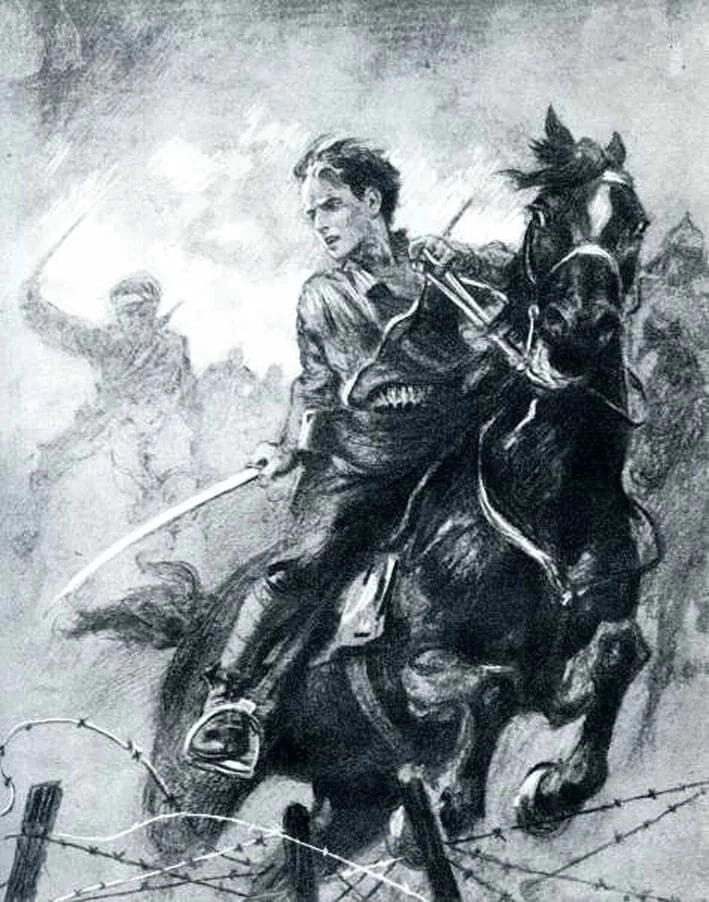
The Poem
Забыть не могу, как впервые,
Дыханье в груди затая,
Листая страницы живые,
С Корчагиным встретился я.

Дымилась роса спозаранку,
И виделось мне наяву,
Как мчится лихая тачанка,
В степи приминая траву...

Надвинулись грозные годы,
И я постепенно привык
С Корчагиным
Боль, и невзгоды,
И радость делить на двоих.

Был Павка не книжным героем -
Он другом и братом мне был:
Махорку со мной перед боем
Он в тихой землянке курил.

Ложбину утюжили танки.
Но так же, как встарь, наяву
Мне виделось -
Мчатся тачанки,
В степи приминая траву.

Когда, прижимая к оврагу,
Свистел раскалённый металл,
В комбате, встающем в атаку,
Корчагина я узнавал.

Он тем бесконечно мне близок,
Что, выйдя с трудом из огня,
По рытвинам в сумерках синих
Тащил к медсанбату меня.

Он тем для меня легендарен,
Что, дерзкой мечтой окрылён,
С ним в космос поднялся Гагарин,
Такой же бесстрашный, как он.

Я счастлив, что золотом солнца
Мой день неизбывно богат,
Что стоит позвать - отзовётся
Мой старший товарищ и брат.

Нам всюду хватает работы:
Тревожат рассвет трактора,
Идут на грозу самолёты,
В турбинах поёт Ангара.

Шумят, зацветая, делянки,
Но так же, как встарь, наяву
Я вижу, как мчатся тачанки,
В степи приминая траву.

На стройках, где слабым нет места,
В ущельях,
Со звёздных орбит,
С трибуны партийного съезда
Корчагин со мной говорит.

И голос над вольным простором
Летит,
И лучатся глаза -
Не старится друг мой, с которым
Мне в жизни расстаться нельзя.

Иду я дорогой земною,
Служу, как умею, стране,
И Павка Корчагин — со мною,
И Павка Корчагин — во мне.


[Translation is original and performed by fahrsprojects.blog]
01  I cannot forget the first time,
02  Holding my breath within my chest,
03  Turning the living pages of the book,
04  I met Korchagin.

05  The dew was breathing at the dawn,
06  And I saw before me as if real,
07  A wild tachanka [machine gun cart] rushing,
08  Crushing the grass on the steppe...

09  The terrible years have descended,
10  And gradually I got used
11  To sharing with Korchagin
12  My pain, my hardships,
13  And my joy.

14  Pavka [Pavel Korchagin] was not a hero from some book -
15  He was a friend and a brother to me:
16  He smoked tobacco with me before the battle
17  In our quiet dugout.

18  Tanks ironed out the ravine.
19  But just as in the old [civil war] days, as if real,
20  I saw -
21  The tachankas are rushing,
22  Crushing the grass on the steppe.

23  When the heated metal [bullets] whistled,
24  Pinning me down against the hill's grass,
25  In the kombat [battalion commander] rising to attack,
26  I recognized Korchagin.

27  He is endlessly dear to me for that,
28  That, himself having barely escaped the fire,
29  Through ruts in the blue twilight
30  He dragged me wounded to the hospital.

31  He is legendary to me for that,
32  That, inspired by a daring dream,
33  Gagarin rose to space with him,
34  Just as fearless as he.

35  I am happy that with the sun's gold
36  My day is perpetually rich,
37  That if I call - he will answer,
38  My older comrade and brother.

39  We have enough work everywhere:
40  Tractors disturb the dawn,
41  Airplanes fly into the storm,
42  The Angara [Soviet space rocket] sings in her turbines.

43  The planting areas rustle, blooming,
44  But just as in the old days, as if real,
45  I see the tachankas rushing,
46  Crushing the grass on the steppe.

47  From the construction, where there is no weak,
48  From the mountain gorges,
49  From the stellar orbits,
50  From the tribune of the Party Congress
51  Korchagin is speaking to me.

52  And his voice flies
53  Over the boundless expanse,
54  And his eyes shine -
55  My friend, who I can't part with, does not age.

56  I walk the earthly road,
57  I serve the country as I can,
58  And Pavka Korchagin is with me,
59  And Pavka Korchagin is within me.
When Will the Dawn Break, Comrade? [Quand fera-t-il jour, camarade?]
Mireille Mathieu
Analysis of the references in When Will the Dawn Break, Comrade?
The Poem
Ils avançaient l´air buté, poings aux poches
Ils souriaient en pensant à Gavroche
Ils s´enfonçaient dans le vent
Et toujours, ils espéraient au levant que le jour
Viendrait un jour

Quand fera-t-il jour Camarade?
J´entends toujours cette question
Qu´ils se posaient les camarades
Pendant qu´un vieux croiseur en rade
Gueulait à plein canon
C´est pour de bon

Ils avançaient à grand peine, à grands pas
Ils arrivaient de la guerre du bois
Ils espéraient le soleil et l´amour
Ils s´épaulaient les amis de toujours
Serraient les rangs

Quand fera-t-il jour Camarade?
J´entends toujours cette question
Qu´ils se posaient les camarades
Pendant qu´un vieux croiseur en rade
Gueulait à plein canon
C´est pour de bon

Lorsque revient l´automne et les grands soirs
Lorsque la nuit est plus longue et plus noire
Je me souviens d´un soir à Petrograd
Où les anciens se cherchaient dans le noir
Ohé, les gars!

Quand fera-t-il jour Camarade?
J´entends toujours cette question
Qu´ils se posaient les camarades
Pendant qu´un vieux croiseur en rade
Gueulait à plein canon
Révolution


[Translation is done by AI]
01 They marched with stubborn looks, fists in pockets
02 They smiled thinking of Gavroche
03 They pushed deep into the wind
04 And always, at sunrise, they hoped the day
05 Would come one day

06 When will the dawn break, Comrade?
07 I still hear this question
08 That the comrades asked themselves
09 While an old cruiser in the harbor
10 Roared with full cannon
11 This is for good

12 They advanced with great struggle, with great strides
13 They came from the war in the woods
14 They hoped for the sun and for love
15 They stood shoulder to shoulder, friends forever
16 Closing the ranks

17 When will the dawn break, Comrade?
18 I still hear this question
19 That the comrades asked themselves
20 While an old cruiser in the harbor
21 Roared with full cannon
22 This is for good

23 When autumn returns and the Great Nights come
24 When the night is longer and darker
25 I remember an evening in Petrograd
26 Where the veterans sought each other in the dark
27 Over here, lads!

28 When will the dawn break, Comrade?
29 I still hear this question
30 That the comrades asked themselves
31 While an old cruiser in the harbor
32 Roared with full cannon
33 Revolution
- World War II in the Soviet/Russian political terminology. ↩︎
 fahrsprojects.blog